
In 1969, Peter Drucker reminded his audience that “Perception is Not logic.” It’s also not natural, or necessarily familiar. “We perceive, as a rule, what we expect to perceive. We see largely what we expect to see, and we hear largely what we expect to hear.”
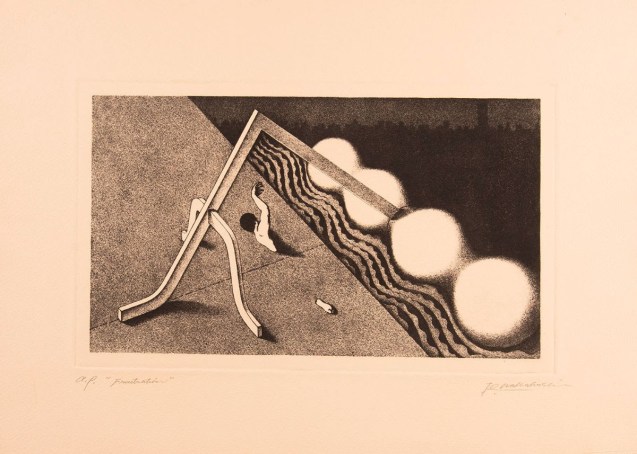
I don’t know if Drucker was a fan of surrealism, as he’s known for his rationalism. Where Surrealism explores the subconscious and irrational through dream-like imagery and juxtapositions. 100 years ago last October, a French writer and cultural theorist, Andre Breton issues the First Surrealist Manifesto.
So it would not be surprising for Drucker to be affected. While working in London in 1934 , an unexpected encounter with a traveling exhibition of Japanese paintings led to a lifelong devotion. Many years later, Drucker wrote: “Not only had I discovered a new universe of art; I had discovered something about myself. I had experienced a touch, a small touch to be sure but a genuine one, of enlightenment.”
Fast forward to the present, a number of leading institutions and galleries are celebrating Andre Breton and his contemporaries. The Art Institute of Chicago is among them with the focus on Frida Kahlo’s brief sojourn in Paris in 1939 at the invitation of Breton.
It’s difficult to really travel to the past. In our desire to recall any moment, our selection is incomplete and naturally imperfect. Kudos to the institutions who actively stretch the public consciousness, not by telling but showing the less seen aspects present in our midst. Filling in what may have been cut off by the limitations of our frame of reference, the surrealists also sought to push beyond our tunnel vision and experience base. Bringing into the center frame intangible ideas as well as introducing a wider mix of known with lesser known individuals and visualizing or materialize their dynamic effects.
Among the institutions, Art and Object notes, many chose to “introduce lesser known, but equally inspiring, artists— many of them women— whose work explores the unconscious.”
In your business, the unseen may lack the weight of data you collect, but don’t be fooled. What’s shaping your expectations may surprise you, it also may be clouding your vision and barring your from pursuing greater opportunities.
Take the suggestion from newly published research by the University of Cambridge to boost your abstract thinking skills. Not only is a trip to an art exhibition a chance for psychological distancing that eases anxiety, it also offers opportunity to gain greater clarity.
Let me know how it feels, or what new things you see.
 FrameStretching